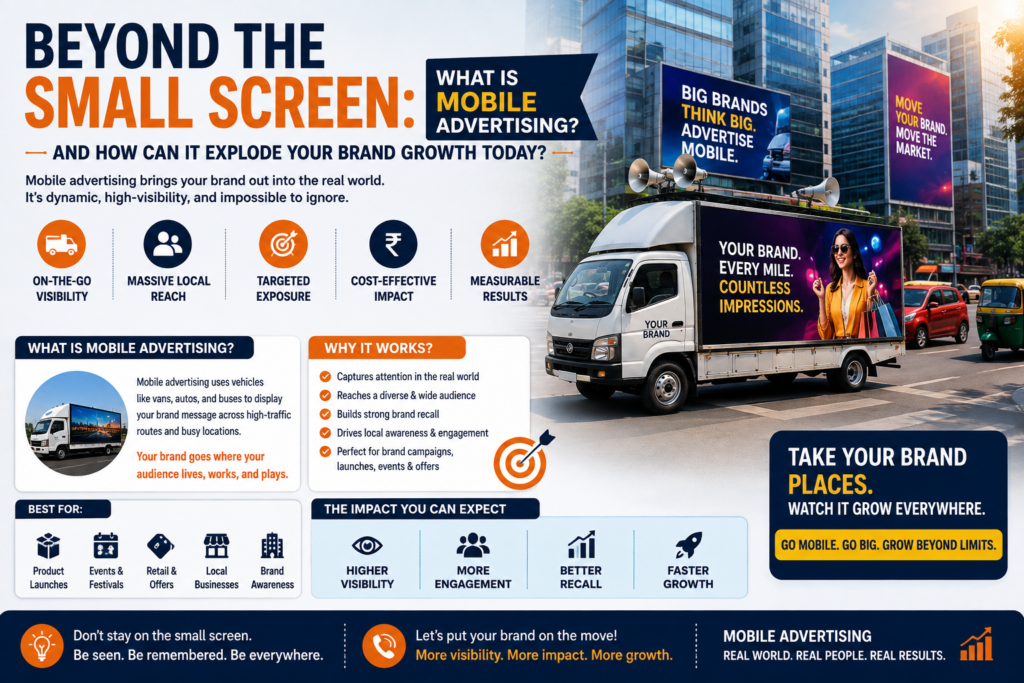
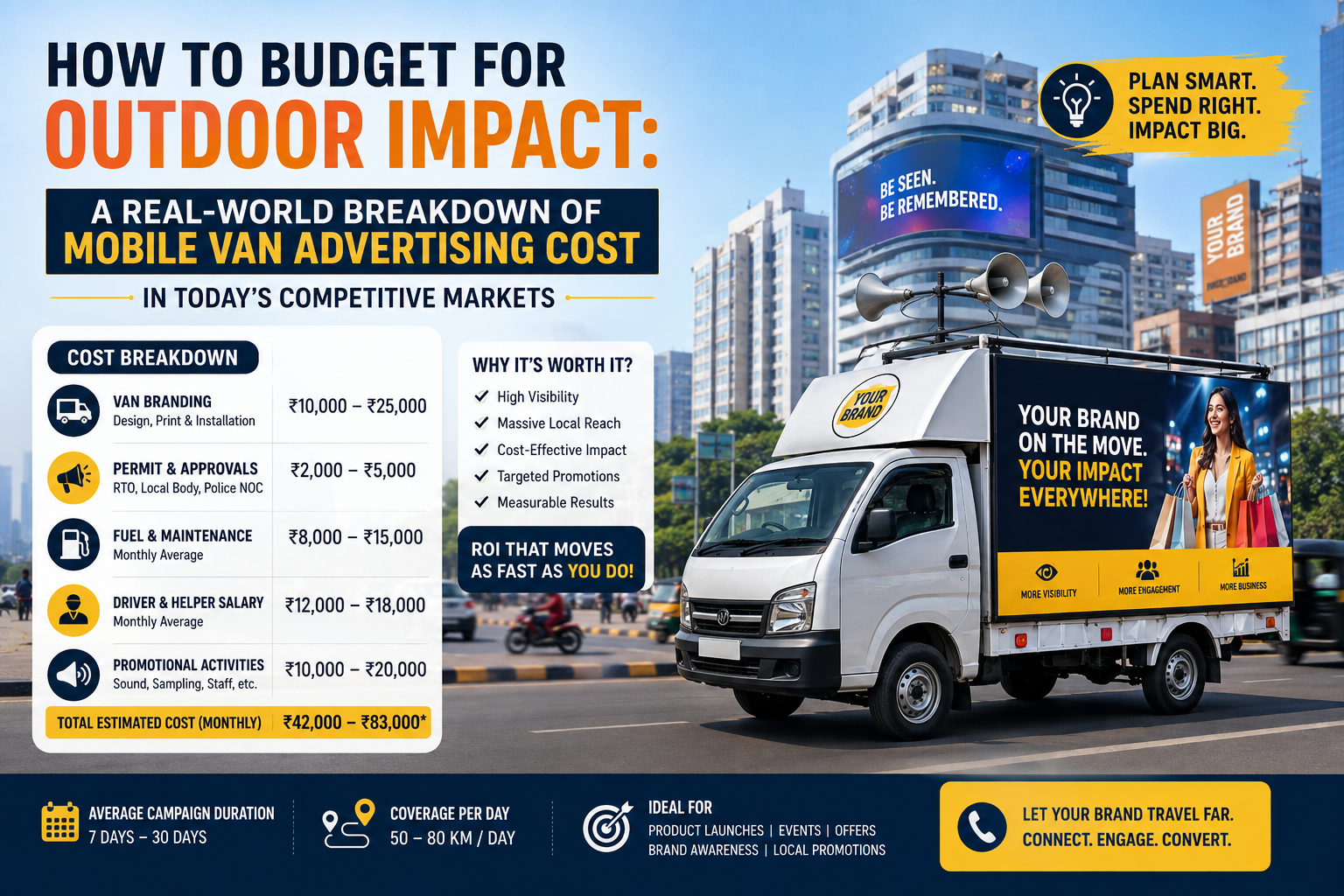
Modern consumers are increasingly blind to digital banner ads and social media promotions. Consequently, local businesses must find physical ways to capture audience attention on the streets. If you are planning a hyper-local campaign, the average mobile van advertising cost typically ranges from $1,500 to $8,000 per month. This investment can yield massive local visibility when executed correctly.
However, calculating your exact budget requires analyzing several local market variables. Indeed, the final price tag is rarely a one-size-fits-all figure. Therefore, understanding the components of mobile van advertising cost will help you negotiate better rates and maximize your return on investment.
In addition, geographical factors and technology choices will heavily sway your overall campaign invoice. For instance, a digital LED truck in New York City commands a vastly different price than a vinyl-wrapped van in a quiet suburb. Let us dive deep into the actual numbers to see what you should expect to pay.
Key Takeaways
- Average Price Range: Standard campaigns run between $1,500 and $8,000 per month, depending heavily on the vehicle type and target market.
- Digital vs. Static: Digital LED trucks offer high engagement but cost significantly more daily compared to long-term vinyl wraps.
- Hidden Expenses: Always budget for permit fees, fuel surcharges, driver salaries, and graphic design production.
- ROI Optimization: You can lower your average mobile van advertising cost by booking longer campaigns or choosing partial vehicle wraps.
Analyzing the Core Factors of Mobile Van Advertising Cost
To build an accurate marketing budget, you must examine the individual elements of transit media pricing. Specifically, operational costs are not merely about renting the vehicle itself. You must also account for the creative production, driver labor, and route planning.
Furthermore, the physical size of the vehicle plays a massive role in your final bill. Consequently, larger vans require more vinyl material and more labor-intensive installation processes. Therefore, your upfront mobile van advertising cost will naturally rise with the scale of your visual display.
Geographic Location and Target Market Dynamics
Location is arguably the most powerful variable driving outdoor media pricing. For example, high-traffic metropolitan areas demand premium rates due to the sheer volume of daily impressions. Consequently, advertising in dense city centers will always cost more than running routes in rural communities.
Moreover, local municipal regulations can influence operational expenses. Some cities require expensive permits for commercial transit displays. Therefore, your agency must factor these compliance fees into your final pricing package.
Campaign Duration and Commitment Levels
Most outdoor media agencies offer tier-based pricing structures. Consequently, committing to a longer campaign duration often reduces your average daily or weekly rate. For instance, a three-month campaign will typically have a lower monthly cost than a single-week activation.
However, short-term campaigns are excellent for product launches or weekend events. In addition, you should expect to pay a premium for these brief, high-impact windows. Therefore, careful scheduling is essential to balance your budget against your promotional goals.
Driver Salaries and Operational Logistics
Unlike stationary billboards, mobile advertisements require active human labor to navigate target routes. Consequently, driver salaries constitute a significant portion of your ongoing expenses. Furthermore, rising fuel prices can directly impact your daily operational budget.
As a result, many agencies now include fuel surcharges in their contracts. Therefore, you must clarify whether fuel and driver costs are bundled into the initial quote. Otherwise, these operational fees might surprise you when the final invoice arrives.
Average Price Ranges by Vehicle and Media Type
To help you visualize your potential investment, we must categorize the different options available. Indeed, the vehicle style you select will dictate the baseline pricing. Choosing the wrong vehicle type can quickly exhaust your marketing budget.
Generally, static vinyl wraps are the most budget-friendly option for long-term brand awareness. On the other hand, digital LED trucks offer dynamic, eye-catching video capabilities at a higher price point. Let us explore how these options compare in terms of mobile van advertising cost.
Traditional Vinyl Wrapped Vans
Vinyl wrapping is a highly reliable method for consistent, continuous exposure. Typically, the production phase involves printing your high-resolution design onto durable, weather-resistant vinyl sheets. Consequently, the initial setup includes both printing and professional installation fees.
Once wrapped, the vehicle can navigate its route for months without additional production charges. Therefore, the ongoing mobile van advertising cost for vinyl wraps remains relatively low and predictable. Typically, you can expect to pay between $1,500 and $3,500 per month for this classic option.
Digital LED Mobile Billboard Trucks
If you want to capture immediate attention, digital LED screens are incredibly effective. These vehicles feature bright, high-definition screens that can display video content, rotating ads, or live social feeds. Consequently, they are ideal for high-impact evening events or busy shopping districts.
However, this advanced technology comes with a premium price tag. Specifically, the digital mobile van advertising cost usually ranges from $1,200 to $3,000 per day. Therefore, digital options are best reserved for short-term, high-budget product launches or highly targeted local events.
Custom Experiential Display Vans
Some brands require more than just a moving billboard. For instance, glass-walled display vans allow consumers to see products arranged inside a mobile showroom. Consequently, these custom builds offer unparalleled engagement opportunities.
Nevertheless, custom fabrication and interior design significantly inflate your initial expenses. As a result, the total mobile van advertising cost for experiential setups can easily exceed $10,000 per week. Therefore, these specialized vehicles are typically utilized by established brands with substantial marketing budgets.
Production and Installation Breakdown
Before your vehicle ever hits the streets, you must pay for prep work. Specifically, graphic design and material production require specialized skills. If your creative assets are not formatted correctly, the final print will look pixelated and unprofessional.
Furthermore, wrapping a commercial van requires a climate-controlled facility and certified installers. If the wrap is applied poorly, it will bubble and peel, ruining your brand image. Consequently, investing in high-quality installation is non-negotiable for a professional look.
Typically, the physical wrap production and installation costs range from $2,000 to $5,000. This is a one-time fee, assuming you do not change the creative design mid-campaign. Therefore, keeping the same design for several months helps lower your average mobile van advertising cost over time.
Comparing Mobile Billboards to Traditional Media
To justify this investment, it is helpful to compare transit media with other advertising channels. For instance, stationary billboards are highly effective but are locked to a single location. Consequently, if traffic patterns change, your audience exposure drops.
In contrast, mobile vans can actively follow your target audience throughout the day. For example, a van can circle a sports stadium before a game and then move to a nightlife district later that evening. Therefore, the flexibility of transit media often delivers a much lower cost-per-thousand (CPM) impressions than static outdoor ads.
Furthermore, digital PPC ads are becoming increasingly expensive due to intense online competition. As a result, local physical advertising offers a refreshing, clutter-free way to reach consumers. Consequently, the overall mobile van advertising cost often proves highly competitive when compared to digital acquisition costs.
Hidden Fees to Anticipate in Your Budget
When reviewing agency proposals, you must look closely at the fine print. Indeed, many business owners overlook secondary expenses that can quietly inflate their budget.
For example, route customization fees can apply if you want the driver to follow a highly specific, non-standard path. In addition, overnight storage and security fees might be charged if the vehicle operates far from its home depot. Therefore, you must ask for an all-inclusive breakdown before signing any contract.
Furthermore, maintenance and cleaning are critical to keeping the advertisement looking pristine. If the van drives through mud or dusty construction zones, it will require frequent washing. Consequently, you should confirm who covers these ongoing maintenance fees to avoid unexpected additions to your mobile van advertising cost.
Designing for Transit: How Creative Choices Affect Price
The visual appeal of your mobile billboard directly impacts its effectiveness. However, complex designs can also influence your overall production budget. For instance, reflective vinyl materials or custom 3D extensions cost significantly more than standard matte finishes.
Therefore, you must balance your creative vision with your budget constraints. If you work with an experienced designer, they can create a high-impact layout using standard materials. Consequently, you can keep your mobile van advertising cost manageable while still turning heads on the street.
Additionally, the type of wrap you choose dictates the material volume. A full wrap covers the entire vehicle, including the windows with perforated film. On the other hand, a partial wrap covers only the sides and rear. Consequently, opting for a partial wrap is an excellent way to lower your initial production expenses.
Regional Price Variations Across Major Cities
As mentioned earlier, geography is a primary driver of transit media pricing. To give you a clearer picture, let us examine the cost variations across different metropolitan landscapes.
In highly populated cities like New York, Los Angeles, or Chicago, demand for physical ad space is exceptionally high. Consequently, a standard vinyl mobile van advertising cost in these hubs can range from $4,000 to $7,000 per month. Furthermore, congested traffic patterns mean vehicles move slower, which actually increases viewing times for pedestrians.
Conversely, in mid-sized cities like Columbus, Indianapolis, or Salt Lake City, operational costs are much lower. Consequently, you can expect to secure similar campaigns for $2,000 to $3,500 per month. Therefore, local businesses in mid-tier markets can often achieve a highly cost-effective outdoor presence.
In addition, suburban and rural routes offer the lowest pricing tiers. However, the audience density is also significantly lower. As a result, you must weigh the cheaper mobile van advertising cost against the reduced number of daily impressions.
Legal Considerations and Permit Costs
Operating a commercial vehicle with large-scale advertisements requires compliance with local transport laws. Specifically, some municipalities have strict bans on mobile billboards to prevent traffic distractions. Therefore, you must ensure your chosen agency has all the necessary legal clearances.
In cities where mobile ads are permitted, special permits are often required. Consequently, these permit fees are typically passed down to the client. If an agency quotes you an unusually low price, they might be cutting corners on legal permits.
However, operating without proper permits can result in heavy fines or vehicle impoundment. As a result, your campaign could be abruptly halted, wasting your entire investment. Therefore, always confirm that all local permit fees are included in your mobile van advertising cost quote.
Strategic Ways to Reduce Your Campaign Expenses
Fortunately, there are several practical methods to optimize your transit media budget. Specifically, careful planning can help you secure better rates without sacrificing campaign impact.
First, consider booking your campaign during off-peak seasons when agency inventory is high. Consequently, agencies are often more willing to offer discounts or waive setup fees. Therefore, timing your promotions strategically can lead to substantial savings.
Second, you can share the vehicle space with a non-competing local business. For instance, a local real estate agency and a mortgage broker could co-sponsor a mobile billboard. As a result, both brands split the mobile van advertising cost while targeting the exact same local demographic.
Finally, simplifying your wrap design can also reduce production expenses. Instead of a full vehicle wrap, you might opt for a partial wrap or simple side panels. Consequently, you will save on both printing materials and installation labor while maintaining a professional look.
Choosing the Right Agency: Questions to Ask
Selecting a reputable media partner is critical to the success of your campaign. Indeed, the right agency will help you maximize your budget and avoid costly operational mistakes.
To ensure you get the best value, you should ask several key questions during your initial consultation. Specifically, ask for a detailed breakdown of all administrative, production, and driver fees. Consequently, you will have a clear understanding of where every dollar is being spent.
Furthermore, ask about their vehicle tracking capabilities. Reliable agencies use GPS tracking to provide real-time proof of play and route verification. Therefore, you can verify that your mobile billboard is actually reaching your target audience during peak hours.
The Impact of Seasonality on Transit Ad Rates
Just like other advertising mediums, transit media prices fluctuate throughout the year. Consequently, understanding these seasonal trends can help you secure more favorable rates.
Holiday and Peak Season Surges
During major shopping seasons, such as the run-up to Christmas or back-to-school periods, demand for outdoor advertising spikes dramatically. Consequently, many agencies raise their rates due to limited vehicle inventory. Therefore, your average mobile van advertising cost will likely be higher during the fourth quarter of the year.
In addition, summer months often see increased rates due to the high volume of outdoor festivals and community events. If you plan to target these crowded gatherings, you must book your vehicles months in advance. Otherwise, you may face premium rush fees on top of standard rates.
Off-Peak Winter Discounts
In contrast, the post-holiday winter months (January and February) are typically much slower for retail and advertising. Consequently, media agencies are often eager to fill their schedules. Therefore, this is the perfect time to negotiate discounted rates or request complimentary route extensions.
By planning your major brand-awareness campaigns during these off-peak windows, you can significantly lower your average mobile van advertising cost. As a result, you get the same high-impact exposure for a fraction of the peak-season price.
Measuring the ROI of Your Transit Campaign
To determine if your campaign is truly cost-effective, you must track your results. Fortunately, modern technology makes tracking outdoor media much easier than in the past.
For example, you can print a unique QR code or custom promo code on the side of the van. Consequently, any conversions using that specific code can be directly attributed to your mobile advertisement. Therefore, you can easily calculate your precise return on investment.
In addition, you can use unique landing page URLs or dedicated phone numbers. By monitoring the traffic spikes on these specific channels during campaign hours, you gain clear insights. As a result, you can confidently decide if your mobile van advertising cost is delivering a positive financial return.
Frequently Asked Questions About Transit Advertising
What is the average monthly mobile van advertising cost?
The average monthly mobile van advertising cost generally ranges from $1,500 to $8,000. This price varies based on the city, the size of the vehicle, and whether you choose a static vinyl wrap or a digital LED display.
Are fuel and driver fees included in the overall mobile van advertising cost?
It depends on the agency. Some agencies offer all-inclusive packages that bundle fuel, driver salaries, and insurance. However, others bill these as separate surcharges, so you should always ask for an itemized quote.
How does digital LED mobile van advertising cost compare to vinyl wraps?
Digital LED trucks are significantly more expensive and are usually billed daily (ranging from $1,200 to $3,000 per day). Conversely, vinyl-wrapped vans are much more cost-effective for long-term campaigns, averaging $1,500 to $3,500 per month.
Can I reduce my mobile van advertising cost with a partial wrap?
Yes, opting for a partial wrap or simple side panels instead of a full vehicle wrap can reduce your production and installation costs by up to 50%. This is an excellent strategy for businesses on a limited budget.
Is mobile van advertising cost-effective for small local businesses?
Yes, it is highly cost-effective because it allows you to target specific neighborhoods, local events, and competitor locations directly. This hyper-targeted approach often results in a lower cost-per-impression than traditional static billboards.
Ready to Drive Real Local Growth?
Maximize your brand’s physical presence with a highly targeted transit campaign. Contact us today to receive a fully customized quote tailored to your local market and budget constraints.